Zach’s Belt
Nine Perfect StrangersZach’s Belt is the brown leather R.M. Williams belt Heather Marconi bought for her son as a Christmas present only weeks before he used it to hang himself. Its significance lies in the collision between its ordinary history as a costly family gift and its terrible use in Zach’s death: Napoleon Marconi remembers the belt in exact detail as he revisits the morning and imagines the different choice that might have let him reach his son.
Identity and History
The belt was brown leather and made by R.M. Williams. Heather had bought it for Zach for Christmas, and Napoleon remembered that it had cost ninety-nine dollars. The price had struck him as excessive: when Heather showed him the gift, he called it an expensive belt, then fished the receipt out of the plastic bag and raised his eyebrows. Heather shrugged. Zach had admired the belt once, and Napoleon recalled that Heather tended to overspend every Christmas.
That small domestic exchange gives the object a life before the tragedy. It had been selected as a present, shown to Napoleon, and admired by Zach; its cost and the family’s familiar Christmas habits make it an unremarkable possession, not something introduced as a warning. Only after Zach’s death does the belt’s everyday identity become inseparable from what it was used to do.
The Belt and Zach’s Death
Heather was the one who found Zach. Napoleon remembers his wife’s scream and his own attempt to reach the scene, an ascent up the stairs that seemed to take a lifetime. The belt had become the noose. The detail that Heather had bought it only weeks earlier makes the object’s proximity to the family especially painful: a recent gift is transformed into the instrument of their son’s death.
Zach left neither a note nor a text explaining his actions. The belt therefore provides a concrete fact about how he died, but no explanation for why. It cannot speak for him or resolve what his family does not know. The absence of a message sharpens the contrast between the vivid material detail Napoleon can recover—the leather, the brand, the price, the receipt—and the motive that remains unavailable.
Napoleon’s Recollection and Counterfactual
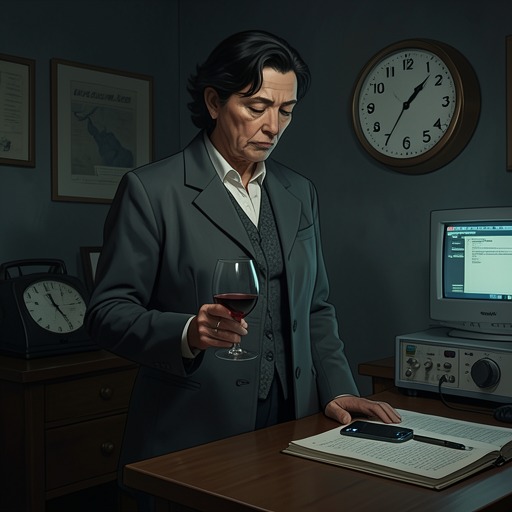
Napoleon examines his memories repeatedly, like a homicide detective combing through evidence. One image returns with particular force: his hand reaching for the phone and his thumb pressing the snooze button. Alongside the memory, he sees an alternative morning in which he turns off the alarm, gets out of bed, knocks on Zach’s door, and invites him to go paddling. The belt’s remembered history sits within this painstaking reconstruction, where small household details become evidence in a case Napoleon cannot close.
Napoleon believes without doubt that, had he risen at the time he originally planned, he would now have a wife who was not broken, a daughter who still sang in the shower, and a son about to celebrate his twenty-first birthday. This is his counterfactual conviction, not proof that he could have prevented the suicide. He had often urged Zach to think ahead, warning that some mistakes had lasting consequences; after the death, that familiar parental concern hardens into the tormenting belief that he himself failed to act in time.
Meaning and Narrative Role
The belt concentrates the novel’s tension between the ordinary and the irreversible. Its price, brand, plastic bag, and place in a Christmas exchange belong to routine family life; its later use cannot be reconciled with that routine or undone. Because Napoleon recalls both the gift and the snooze-button decision, the object becomes part of his effort to give the morning a sequence of causes he can inspect, even though the evidence cannot restore the missing explanation or establish what would have happened in another version of the day.
The object also marks the limits of Napoleon’s identity as someone who knows how to guide boys. He has kept cards and letters from former pupils and their parents praising the help he gave them, yet he believes he failed the one boy who mattered most to him. Against those affirmations, Zach’s belt is not an answer but a stark material remainder: it shows what happened, while leaving Napoleon to live with what he cannot know. Its narrative force comes from that gap between factual certainty and emotional uncertainty.